Home

One Hundred Years Hence Predictions!

Leave a comment

Image

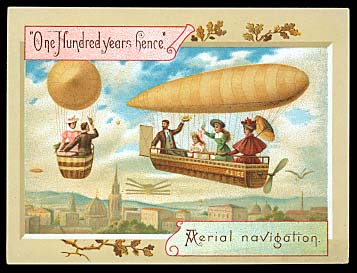
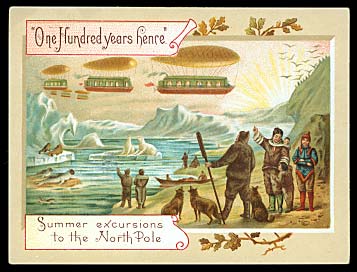
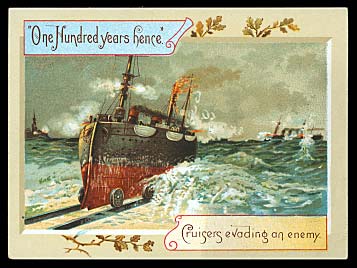
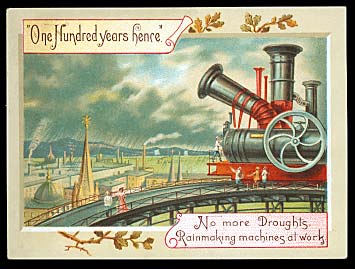
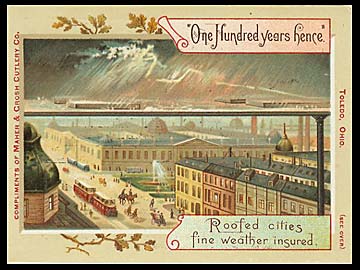
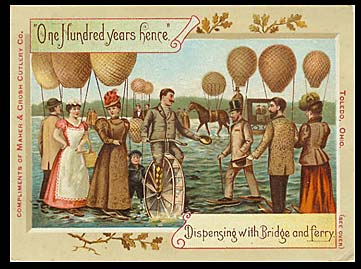
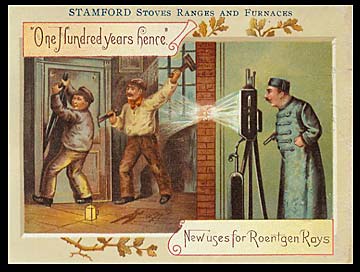
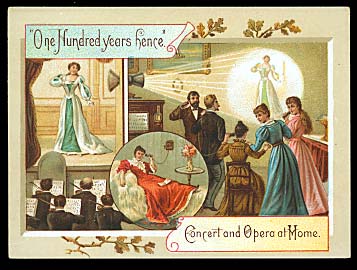
From the 1880s come these 12 cards, which were pre-printed giveaways for companies and were probably originally drawn in Germany.

NOTE: These cards must have been produced later than I initially thought. The 12th card mentions Roentgen rays, and Wilhelm Röntgen didn’t begin his experiments with what we now call X-rays until 1895. So these cards must date a few years after that.

Image

The resolution for these isn’t great, but they’re readable and provide a fun idea of what people expected life might be like in the year 2000!

Image

Here’s some info I found on the Web concerning these:

Near the end of the 1800s, America was in the midst of a second industrial revolution and optimistic about where their technology would lead them. So much so, that as the turn of the century approached, it became popular to make predictions about the year 2000, one hundred years hence.


The trade cards shown are a set of 12 stock cards that predict what things will be like in the year 2000. This set was most likely produced at the Kuntsdruck-Friedberg printing plant in Berlin, Germany, and is found in both American and European versions. The images are identical for both versions, but the American cards are in English and have wider and more decorative borders. The European cards were imprinted for chocolate companies in Germany and Belgium, and the English language cards were imprinted for at least 14 different American companies. [These two paragraphs are based on the article “One Hundred Years Hence” by Richard Sheaff appearing in the Winter, 1999, issue of “The Advertising Trade Card Quarterly” published by The Trade Card Collector’s Association].


Image

Image

Image

Image

Image

Image

Image

Image

Image

Took me a few seconds to realize this was a policeman spying on a couple of crooks.

Not All Launches Are Smooth

Leave a comment

Yet; some are worse than others, and we have to keep things in perspective. I would submit that the January 17, 1997, launch of the Delta II rocket carrying a GPS satellite was one of the worst launches ever.

Image

As the rocket rose 1,500 feet above the ground, things went bad.

The Air Force announcer gets the Understatement of the Year Award for declaring this gigantic fireball “an anomaly,” and later stating that “a major problem has occurred.”

Over 20 cars were melted, tons of flaming debris rained down from the sky, and poison gas clouds covered the launch area. The clouds of gas shown after the explosion were hydrochloric acid, and residents in Cape Canaveral, Florida, and other towns miles away were ordered to stay inside, close all doors and windows and turn off all air conditioners. The concussion from the blast set off car alarms 20 miles away.

Amazingly, no one was killed or seriously injured in this incident. Now THAT was a bad launch!

Kaiser Permanente, Popeye, my Grandfather and Me

6 Comments

Like a Dickens novel, life is full of surprising associations that best come into focus in hindsight. In today’s exciting blog entry, we explore the relationship between Kaiser Permanente; Popeye’s friend the Eugene the Jeep; my grandfather, James P. Page, Sr.; and me.

Years ago, when we first moved to Maryland, we lived in a suburb of Washington, DC, known as Calverton. Patty and I would drive by the nearby Kaiser Permanente Silver Spring Medical Center and wonder what it was.  At that time, the sign just read “Kaiser Permanente” with no indication of what the purpose was of the site.

Henry J Kaiser

Henry John Kaiser (1882-1967) was an American industrialist who became known as the father of modern American shipbuilding. He established the Kaiser Shipyard which built Liberty ships during World War II, after which he formed Kaiser Aluminum and Kaiser Steel. Kaiser organized the Kaiser Permanente health-care system for his workers and their families. He led Kaiser-Frazer followed by Kaiser Motors, automobile companies known for the safety of their designs. (Info swiped from Wikipedia)

The name indicated a relationship with the brilliant industrialist Henry J. Kaiser, of dam-, ship- and auto-building fame, but the Permanente part of the name seemed odd to me. Little did I realize that they would later become our health-care provider or that I would one day be working for the firm. The Permanente part of that name, by the way, comes from the name of a creek that ran by the lodge of Henry and Bess Kaiser in Santa Clara County, California; in 1945, Mrs. Kaiser thought the name would be fitting for the new health system they had started for their shipyard employees. Here’s a recent view of that beautiful creek:

Image

Probably named Permanente Creek by the early Spanish settlers of California because it didn’t dry up during the year.

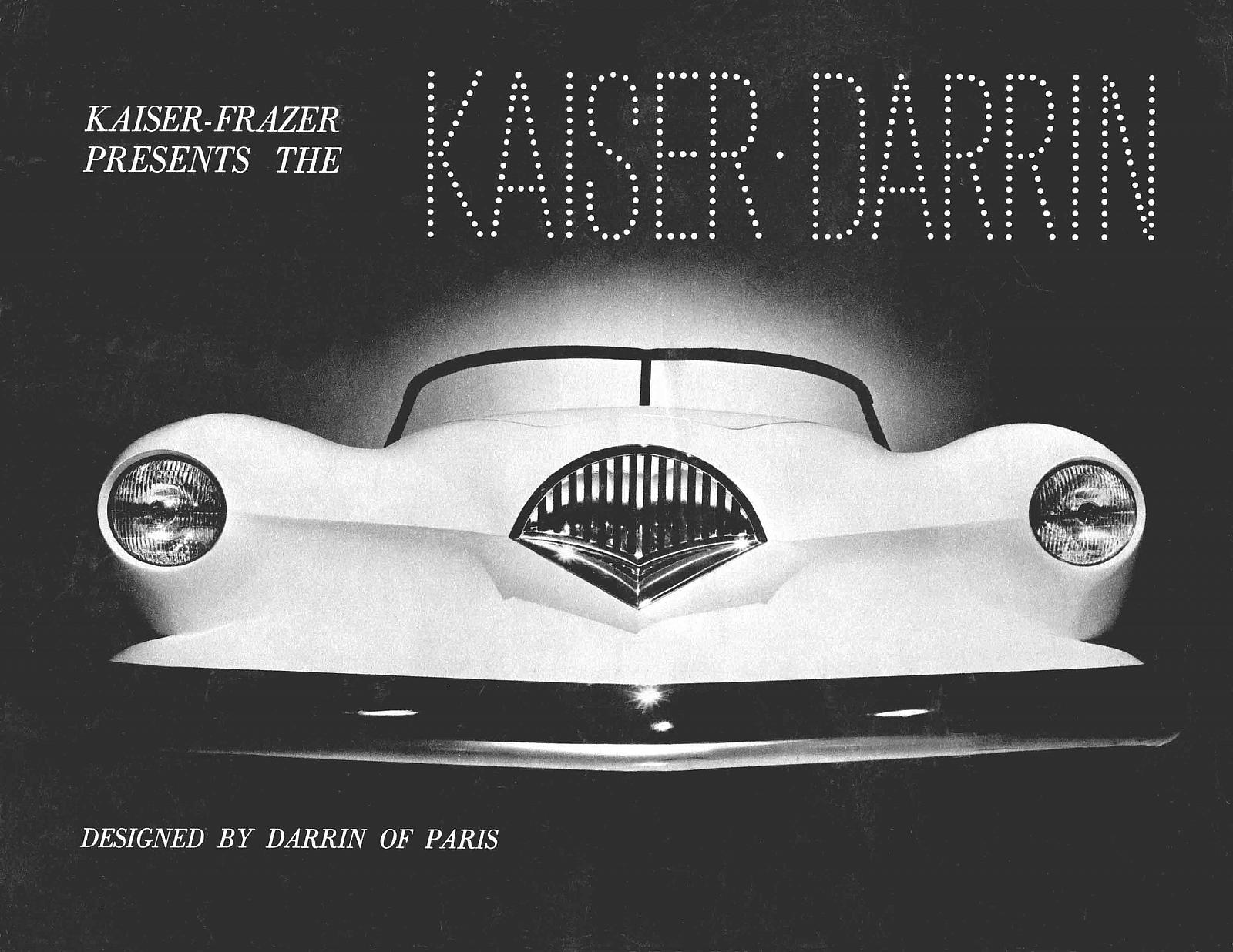
So how do Popeye’s friend and my grandfather and I come into this? Kaiser, with his business associate, Joseph Frazer, began making wonderful cars just after World War II. The autos of Kaiser-Frazer, as their company was called, were very innovative and attractive, and they also made cars called Allstates, which were sold by Sears Roebuck in the 1952 and 1953 model years. Yes; you could buy a car (and houses, for that matter; my 1926-built house is an example!) from a Sears catalog in those days.

Image

Great-looking car; a good many of these were made into hot rods after mom and dad passed them on to the kids!

Image

This amazing Kaiser car, like the Corvette which came out the same year, was made with a huge engine and a fiberglass body.

Image

Ahead of its time and still looks stylish 60 years later.

1951 Kaiser Ad

Typical of the innovations that Kaiser-Frazer autos were known for, this Traveler model would be useful for toting things around in the days before SUVs and minivans.

My grandfather, who was never one to ignore a business opportunity when he saw it, opened what was likely the smallest of Kaiser-Frazer dealerships, on U.S. Route One in Callahan, Florida. Here’s a photo of the then-brand-new dealership; my grandfather is second from the right. The little fellow next to him is my Uncle Ronald, who went on to a 35+ year career as a special agent with the FBI and now lives in New Mexico!

Image

Here’s a recent photo of the Page Building in Callahan, which we still own and rent out to various businesses. To my knowledge, this property has never generated a thin dime in revenue, but there are those in the family who have an emotional attachment to this old building and we guess it pays for its upkeep.

Page Building, Callahan

Until today, I had identified the wrong tacky building as the Page Building. John H, a Callahan historian, kindly pointed out my error. Thanks, John!

Now, let’s get to Popeye, shall we? In the pre-WWII United States, the newspaper comic strip, Thimble Theatre, by Elzie Segar, was a big deal. The best-known member of the strip’s zany ensemble, Popeye the Sailor Man, was a stroke of genius, but Segar had many such strokes and his creations caught the country’s imagination in a big way. Another inspired Segar creation was Eugene the Jeep. The Jeep was a made-up word Segar used to describe his little creature, who had the ability to pop through time and space and do wonderful things for his friends.

Image

The original Jeep!

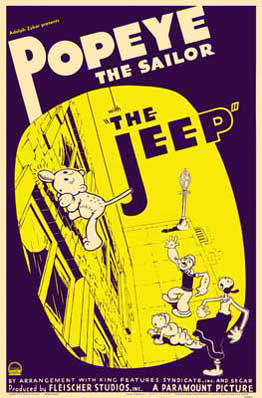
The Jeep character became a big fad, especially among children, and there were books, stuffed toys and cartoons about this loveable character, as shown by this great movie poster from 1938:

Image

Moving forward a few years, into the Second World War, the Willis Corporation developed a General Purpose, or GP, vehicle for the U.S. Army. This rugged and unpretentious four-wheel-drive car was manufactured by the hundreds of thousands during the war, and the GIs of the day dubbed it the Jeep, because, as one soldier said, the thing was “small, able to move between dimensions and could solve seemingly impossible problems.” That, plus the GP designation sounded like the word “Jeep.”

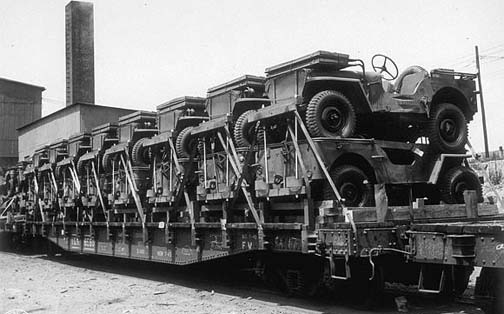
Jeeps On A Flatcar, 1944

Sixteen of the over half-million GP vehicles or Jeeps head to war on a railway flatcar in 1944. Legend has it that you could buy a war-surplus Jeep in the late 1940s for $50.

After the war, Willis was not making too many Jeeps and Kaiser’s autos needed engines; Kaiser bought Willis and used their engines in the Kaiser-Frazer autos. Production of the Kaiser-Frazer line stopped for various reasons in 1955, but Kaiser kept making Jeeps of different types and styles until 1970. They sold that part of their empire to American Motors in that year, and American was later purchased by the Chrysler Corporation, who continue making Jeeps today. My grandfather’s Kaiser dealership closed after his death in the mid 1950s.

Image

The Kaiser line of Willis Jeeps; I’d love to have one of those Utility Wagons.

Kaiser Permanente, of course, has thrived as the nation’s largest, most esteemed and (by my family, at least) best-loved managed-care provider, and I work as manager of marketing and creative operations at their Mid-Atlantic Regional Headquarters. Wonderful place and I’m proud to help in its mission in my small way!

Thus the connection between Kaiser Permanente, Popeye, my grandfather and me!

Kaiser Jeep

One of the last of the Kaiser-built Jeeps romps over rocks.

Dasheen Dreams . . .

4 Comments

If you’ve never heard of dasheen, don’t feel like the Lone Ranger; I hadn’t either. My daughter, Colleen, is the historian of our family and is always finding, archiving and annotating old family photos. Here’s one she found from 1923, showing my grandfather, James P. Page, Sr., and his dad, James Graham Page, at a meeting of the Nassau County (Florida) Dasheen Growers Association in the little town of Callahan:

Image

My grandfather and his father were very active in that organization, or at least they had leadership roles. My grandfather was a heck of a businessman, and owned a lot of businesses that did well. I can’t say how well he and his dad did with dasheen; it put some of his land holdings to productive use, I suppose.

According to what I’ve been able to find out on the Net, dasheen is another term for a type of taro root, and, in the early 1920s, the Florida Secretary of Agriculture was promoting the cultivation of this plant for areas of Florida with boggy land not suited for growing much else except snakes (this part of Florida has 31 types, including six or seven “hot” ones, as the herpetologists call venomous snakes), alligators and pine trees. Here’s a Google satellite photo pinpointing the town of Callahan in Nassau County; my brother, Jeff, and I were born on Amelia Island, where the town of Fernandina Beach is located:

Image

The red arrow points to Callahan, Florida. The dark area to the left of Callahan is the Okefenokee Swamp. The Okefenokee is the largest blackwater swamp in the U.S.; a shallow, 438,000 acre, peat-filled wetland straddling the Georgia–Florida border. Okefenokee is an Indian word meaning “trembling earth.”

Since the area our family is from borders the Okefenokee Swamp that hugs the Georgia line, it’s ideal for such an effort. Here’s a photo of a dasheen plant, and also a photo of the edible root.

Image

Looks like an elephant ear plant, doesn’t it?

Image

Can these make good French fries? America waits for the answer!

This enterprise probably didn’t amount to much, but it’s kind of a nifty idea. Another Net resource mentions that at the height of the dasheen-growing effort, ten boxcar loads of the roots were shipped from Callahan, where we still have a family farm. I don’t think any dasheen is grown on our farm now, though I did see that someone else has a dasheen farm in the area nowadays. Good luck to them!

UPDATE:

Thanks to my daughter, Colleen, for finding the letterhead below from the Dasheen Growers Association in a history of Nassau County. There’s also a little paragraph describing the operation. You can see from the annotations that the photo above, showing the intrepid dasheen growers in Callahan, was from this same book, which was published some years ago.

James_Graham_Page_info_on_Dasheen_Growers_Assn__from_WNCPH

G.I. Combat! Vietnam, Electric Beanie and a Guy Named Joe

Leave a comment

Image

Never having been a big fan of war comics, I almost didn’t download this comic book, G.I. Combat #16, from August of 1954. The cover art by Dick Dillan and Chuck Cuidera caught my eye, as they were the team who drew and inked my favorite Blackhawk comic books, which are on the periphery, I suppose, of war comics. The other almost-war comic I love is Don Winslow of the Navy, which was originally published by Fawcett.

This G.I. Combat issue features the first Vietnam-based war story I’ve seen: “Airfield in Hell.” Of course, at that time, Vietnam was known as French Indo-China. Here’s the splash page for that story:

Image

Following the story is this zany ad for a 98¢ electric Brainstorm Beanie; I bet the freckled hipster shown wearing it would be even more smug if it were a solar- instead of battery-powered Brainstorm Beanie:

Image

And, at the end of the issue is a poignant ad for the Charles Atlas bodybuilding course.

Image

An unfortunate fellow, Joe, is humiliated in front of his girlfriend. In a moment of fury, he sends off for the Charles Atlas course and later becomes a buff and powerful force to be reckoned with. How much later is the question that doesn’t get answered in this ad, though the copy says it will happen “almost before you realize it.” That’s a very carefully worded sentence.

It can’t happen too quickly to suit Joe, I’m sure, but revenge is a dish best eaten cold. Since Joe, his girlfriend, and the white-haired lout who gets his comeuppance are all wearing the same outfits in this sequence, I’m guessing it occurred in one summer.

I have a skinny cousin who took that course and I didn’t expect it to do much for him. I saw him many years later and was stunned at what a brawny fellow he had turned into; he looked like Superman. But that was years, not months, and he also had served 20 years in the Marines.

Two years after this comic was published by Quality Comics, their stable of features was sold to DC Comics and Quality bit the dust. Blackhawk and G.I. Combat were two comics (a love comic was a third) that DC chose to continue publishing. The publisher of Quality, Busy Arnold, retired to Naples and I wish I had known that before he died; I would have looked him up!

RE: My 1960s Naples Mystery Novel

Leave a comment

Mrs. Waples From Naples

The Ill-Fated Mrs. Waples from Naples in his or her prime.

A friend from Naples Before It Was Hip let me know about this earlier today (thanks, Deborah!). It’s a recap of the “Mrs. Waples from Naples” murder. My brother, Jeff, had been on the ambulance crew that worked this incident, and told me– on the QT– that the crew was shocked that Mrs. Waples, a longtime Naples resident and eccentric character, was really a man.

That stuck in my mind, and when I wrote my mid-1960s Naples-based cozy mystery, I used that story as the main element in the plot. Here’s my book, available on Amazon.com, if you care to read it:

So here’s a recap of the true story of Mrs. Waples from Naples:

https://www.facebook.com/media/set/?set=a.10151625354205199.1073741831.236706715198&type=3

Fun With Fender; or, The Saga of Rex O’Saurus

Leave a comment

My friends and I sometimes get carried away on Facebook, but we have a lot of fun doing it. This afternoon, I saw on Shorpy.com an 1898 photo of a government scientist looking at an enormous radio vacuum tube or valve; it may have been the first radio tube. It struck me as comical, so I cropped and sepia-toned a version of the photo on Facebook, with a mock serious caption. Then I found, cropped and toned an old photo of two guys with a giant speaker and put in a second mock-serious caption. Here’s some of the banter that followed:

Leo's Brother And Big TubeMe (original post): In this rare photo, Leo Fender’s older brother, Freddy, examines a newly developed power tube for the proposed Super-Duper-Quadruple Reverb amp, which never reached the production stage. During testing, Freddy and Leo inadvertently flipped the On and Standby switches at the same time, causing a power outage in the Fullerton, California, area that lasted for several days.

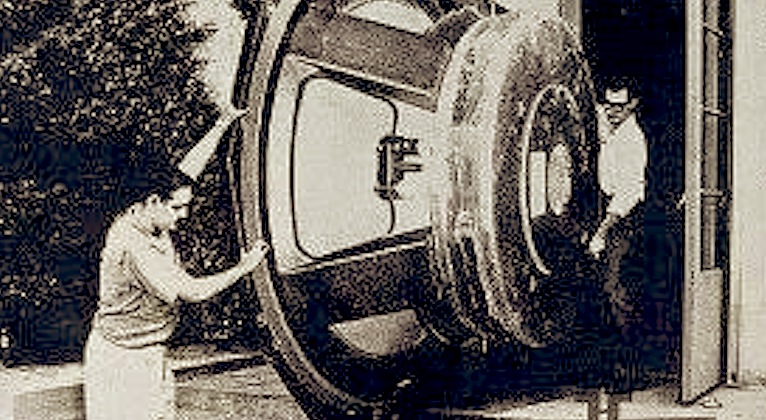
Big SpeakerMe (again): In another rare photo, two unidentified employees of the Fender Musical Instrument Company move one of the four prototype speakers for the proposed Super-Duper-Quadruple Reverb amp into Leo Fender’s test lab. Made by the Jenson Speaker Company, this 142″ speaker was remarkable not only for its size but also for its weight of 276 pounds. The bass response was said to be impressive.

Nutty Friend #1: Can you hear me now? Good!

Me (again): There is a long-standing but never confirmed story that a young Fender employee, Rex O’Saurus, was standing in front of this proposed amp when the first power chord was played through it, and was spontaneously vaporized by the resulting sound blast. It’s true that Mr. O’Saurus was not seen again after the incident, but it may be that he was merely disoriented and wandered away in a dazed condition.

Nutty Friend #1: He later turned up with Marc Bolan and T-Rex, playing cowbell.

Me (again): Jimmy, I’m not certain that is the same Rex O’Saurus, but a clue might be found in his reply when a magazine writer asked him about the incident. His response (“Pardon me? Did you say something?”) could possibly point to a severe hearing impairment earlier in his life. Who can say?

Nutty Friend #1: It’s all hearsay, methinks…

Nutty Friend #2: Huh? (cups hand behind ear)

Me (again): Tyrone O’Saurus, brother of the missing Rex, has said that he hasn’t heard from him since the incident happened in 1965.

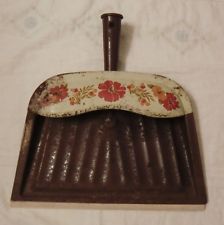
Me (again): Mrs. Terri Dactyl, sister of the long-missing man, has said that her brother Rex was an unsung hero of the music world and should be honored as such. It is rumored that the Fender Corporation may retire from service the metal dustpan used to dispose of Rex’s possible remains and, in his honor, have it nickel plated and engraved with the phrase “Ashes to Ashes and Dust to Dust; We Fired Up the Amp and Rex Went Bust.”

Nutty Friend #3: So Terri Dactyl and Rex gave birth to T-Rex, Bang a Gong, I’m gone!

DustpanMe (again): Just received an email from Oswald Leonidas, historian at Fender, who proposes a contest for the best tribute poem to poor Rex O’Saurus. I will be the judge and remember the lines have to fit on this historic dustpan. My entry: “We’ll Miss Young Rex; He’s Gone, Alas; But You Must Admit; This Amp Kicks Ass.”

••••••••••••••••••••••••••••••••••••••••••••••••••••••••••

It’s all in fun and no disrespect is intended to Fender Musical Instruments or anyone else!

Hard Time Killing Floor Blues

8 Comments

Perhaps the scariest three minutes of music ever recorded were by Nehemiah “Skip” James in 1931, in Grafton, Wisconsin, for the old Paramount blues label.

Image

Here’s the original recording of Skip James’ Hard Time Killing Floor Blues. The way I heard it was that it refers to James working the “killing floor” in a Chicago slaughterhouse.

Any guitar player who has tried to do this song can tell you that it isn’t easy. I think James recorded it in Em tuning; for the sake of not popping strings, I’ve shifted it to Dm in my poor attempts to play it. This style of fingerpicking blues evidently originated in or near Bentonia, Mississippi, where James was from. My dad drove us through Bentonia when I was a kid; it’s a wide spot in the road near where Highway 49 crosses the Yazoo River.

Image

The idea of someone doing this song on an electric guitar is not so novel– I do it on a Strat– but doing it with a band, live, and with an accordion and drums as part of the deal . . . well, it took Lucinda Williams and her fine band to manage that and the following YouTube video is, to me, stunning. Their spare arrangement just nails it:

Sorry I can’t provide any info on this video; the intro, showing someone playing James recording his song on a Stella guitar, is very well done. Folks who knew Skip James, who died in Philly in 1969, say he wasn’t a very happy person much of the time but I suspect he’d love what Ms Williams and her associates did with his wonderful song.

AN ASIDE . . .

It occurs to me that it was almost exactly 50 years ago that our family drove through Bentonia, Mississippi. At the time, the late summer of 1963, we were living in Houma, Louisiana, which is southwest of New Orleans. I don’t know what possessed my dad to move there; they must have had a great airport as flying was the only thing that he cared about. I remember that we were living there when John Kennedy was killed.

My mom, my brother Jeff and I loved Houma. It was deep in the Cajun bayou country and the food, music and people were wonderful. Near Houma was a smaller town called Thibodaux, on the banks of Bayou Lafourche, where my dad took us to a superb little seafood restaurant on the weekends; here’s a photo I took of Jeff standing on Thibodaux’s main drag. Moody and magnificent, wasn’t he?

Jeff In Thibodaux. LA

Here are my mom, Jeff and me in front of our house on Willard Avenue; I’m the geeky-looking guy wearing glasses; I wasn’t moody or magnificent, but at least I was cheerful:

Jim, Mom, Jeff 2

Anyway, there was a hurricane about to hit in that area and it was something to worry about. All that part of the Gulf Coast is low-lying, and the Houma/Thibodaux area especially so. If you recall the Swamp Thing comic books, they were set in Houma. So my dad decided the smart thing to do would be for us to hop in the white DeSoto and spend a few days in Yazoo City, Mississippi (250 miles due north and on higher ground), and Bentonia is 15 miles south of that town.

As it happened, the hurricane came up as far as Yazoo City so we didn’t escape much. But I got to see Bentonia, never dreaming that one day I’d wish I’d paid more attention to it!

Rack ‘Em Up!

4 Comments

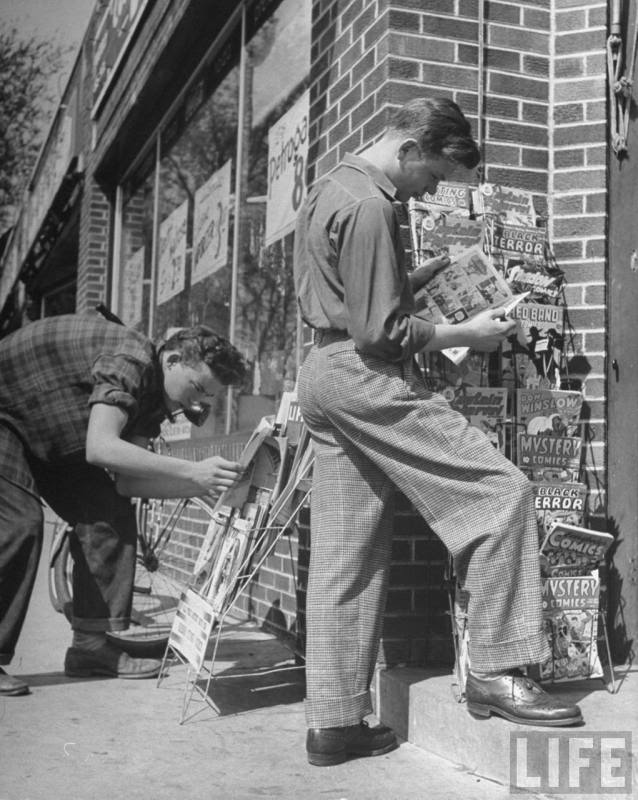
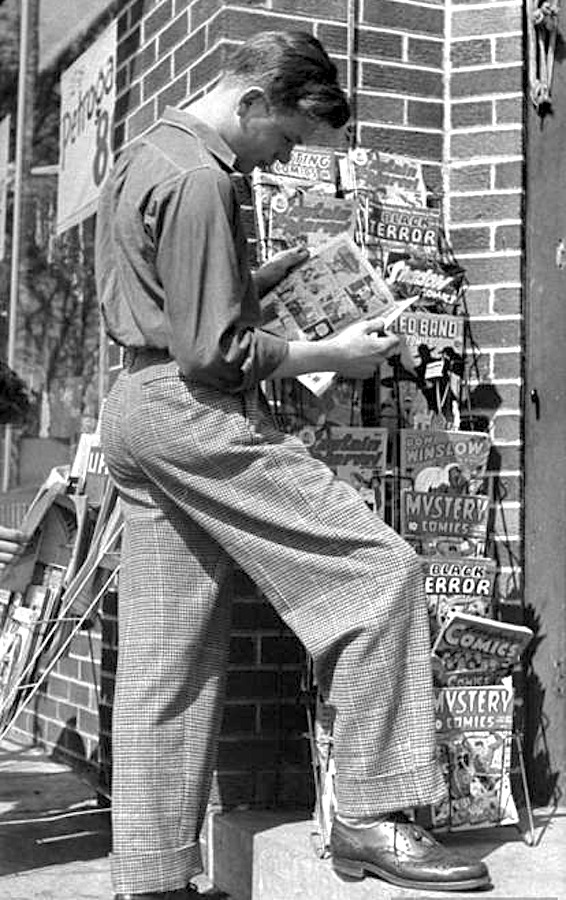
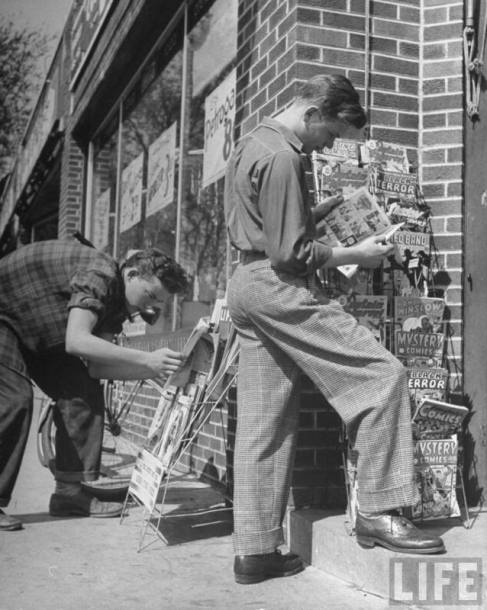
In our last post, we showed a comic-book rack from 1945, with a young man reading one of the offerings on display. The photo we used was a portion of a larger photo from the Life magazine archives. Here’s the whole photo:
Image

Having little going this weekend, I decided to do some research and find the exact covers for all the comics shown on that rack. We’ll start at the top, and go from left to right.

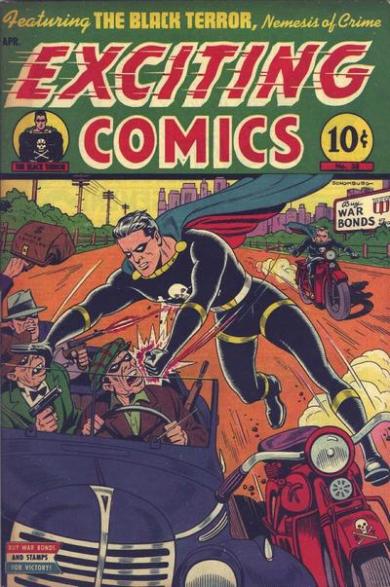
Here’s the first comic, Exciting Comics #38 from April of 1945. Note the sensational cover art by Alex Schomburg. Schomburg was a Puerto Rican-born artist who came to the U.S. in the 1920s and began his ten-year comic-book career in the early 1940s. He worked for Nedor/Better/Standard Publications (as in this instance), and also for Timely Comics, which later evolved into the Marvel Comics Group. Schomburg had two distinct styles; the regular pen-and-ink style, shown here, and a later airbrushed style. For the pen-and-ink covers, he signed his name as Schomburg and for the airbrushed covers, he signed his name as Xela (Alex backwards).

The cover-featured heroes were the Black Terror and his kid sidekick Tim; together, they were referred to as the Terror Twins. Their uniforms or costumes were perhaps the most stylish of those worn by anyone in the Golden Age of Comics. We’ll see them again in this blog entry.
Image

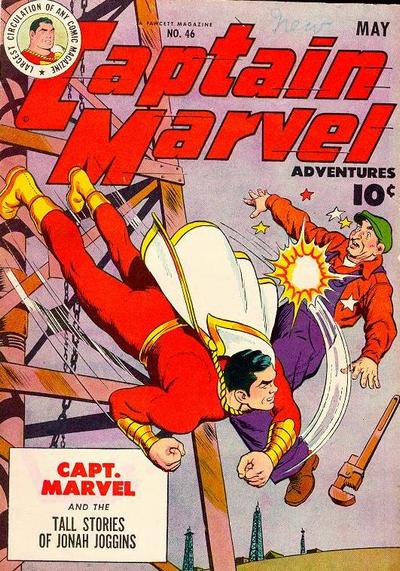
Next on the rack is Captain Marvel Adventures #46, from May of 1945. Probably the best selling comic book of the 1940s, selling over a million copies an issue; CMA was published by Fawcett. Outselling Superman was quite an achievement, and for a while, Captain Marvel Adventures was published every other week instead of monthly, as most comics were.

The head artist for Captain Marvel was C. C. Beck, who later retired to Florida. I was lucky enough to correspond with him by letter in his retirement days and he was an entertainingly cranky and acerbic correspondent! His clean-line art style was perfect for comic books but deceptively simple; his rule, as he wrote to me, was never put in a line that didn’t further the story.

Image

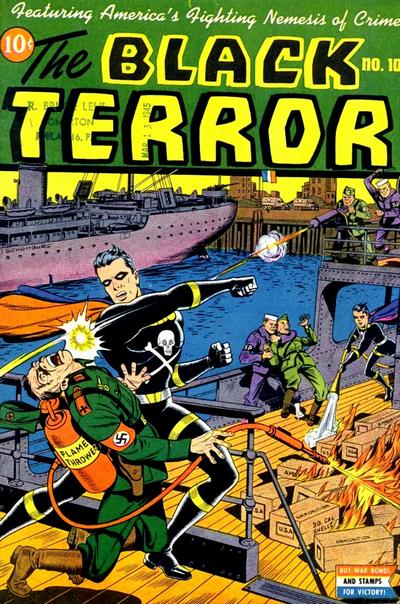
Next on our rack, after a second facing of Captain Marvel Adventures, is Black Terror #10, from May of 1945. The Second World War had ended its European theater by that time, but since comics were written, drawn and printed months in advance, it took a while for them to catch up. In his fight against Nazi villains on this cover, the Black Terror faces a neatly labelled flame thrower; Schomburg was careful to label everything of importance on his covers. He’d have so much going on in his covers that a kid would study them for quite some time after plunking down his dime for the book.

As the comic-book publishers had many stories about WWII in inventory, they’d publish them after with war with Now It Can Be Told! added to the splash pages.

The Black Terror, who in real life was a pharmacist, was invulnerable to knives, flame throwers and bullets, but in almost every story he’d be knocked out by a blow to the back of his head. It confused me as a kid and still does. Maybe it was an Achilles’ heel kind of thing but they should have explained it better in the stories.

Image

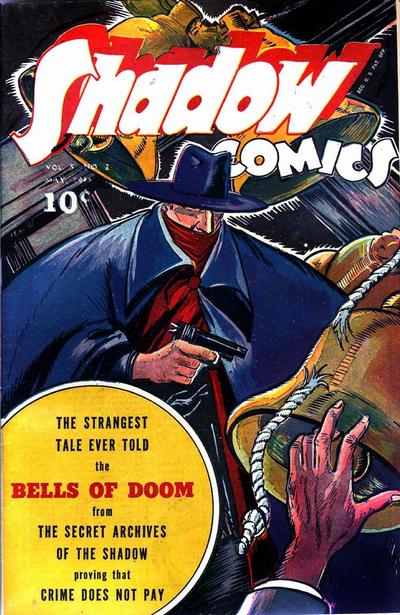
Proceeding down the comic book rack, we come to Shadow Comics volume 5, issue 2. Street & Smith published the Shadow, who was later licensed and published by Archie Comics, DC Comics and others after S&S gave up on comics, which was always a sideline to their pulp magazine business. In these original comics, the Shadow was colored a pale blue when he became invisible by clouding the minds of his enemies. Street & Smith comics had a different look than most other comics, with unusual coloring and some painted covers. I suspect that I wasn’t the only kid annoyed by the way they numbered their product with a volume/issue numbering system; it was less straightforward than just the issue numbering. For teenaged boys, who bought most of the comics, having all the issues was a big deal and probably boosted comic book sales. Hillman Publications, who published the wonderful Airboy Comics, also used that volume/issue scheme.

Image

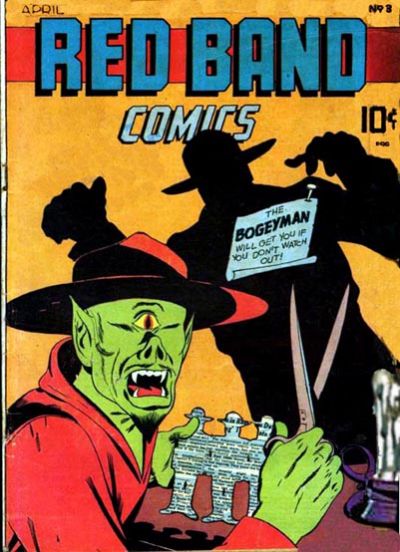
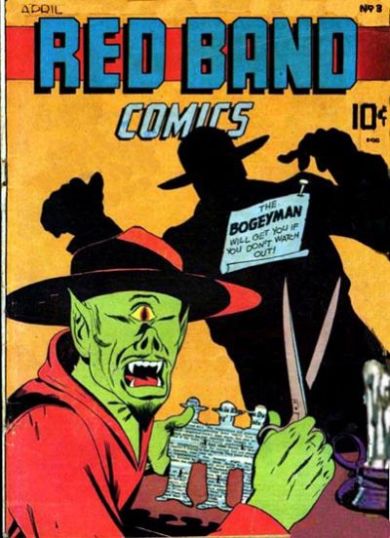
I can’t see enough of the cover of the next comic to identify it, but the one to its right is Red Band Comics, either number 3 or maybe number 4; both had the same cover art and interior contents! I show you the cover of #3 here.

This obscure and rather disturbing and unsatisfying comic was published by an outfit who only operated during 1944 and 1945 called Rural Home Publications. If DC Comics, Fawcett and Dell were first-string publishers, and Nedor/Better/Standard and Timely were second-string, then Street & Smith were third-string and Rural Home was barely in the running.

As you can see, the villain on this cover is quite horrific; the Bogeyman mentioned in the blurb was actually the hero, who’s shadow you see. Bogeyman was a swipe of Will Eisner’s Spirit charactor only drawn with a mustache. Neither Bogeyman or this ugly villain, who’s named Satanas, are in the comic book; covers were to sell the comic and often they promised more than they delivered.
Image

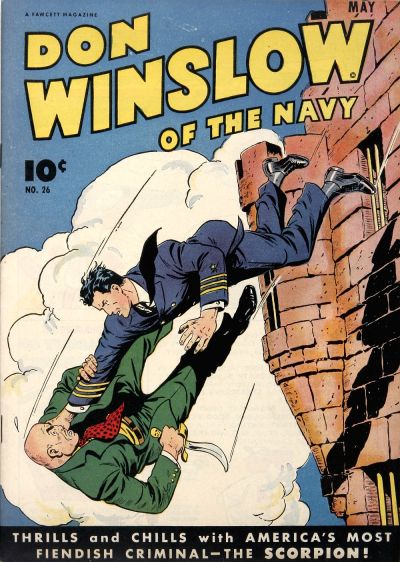
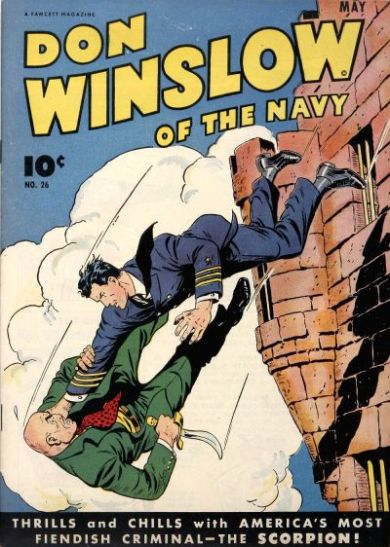
Captain Marvel Adventures #46 gets still another facing on the rack, but to its right is one of my personal favorites: Don Winslow of the Navy! This is issue #26. Don Winslow comics were well drawn and written and after Fawcett got out of the comics business in the early 1950s, they passed the rights to Winslow and a couple of other titles to Charlton Comics, who printed stories that Fawcett had in inventory for a couple of issues.

When I was a kid trying to break into comics in the late 1960s, I’d look for old issues of Don Winslow in second-hand magazine shops in New York City and try to copy the style of the guys who drew them. Great stuff!
Image

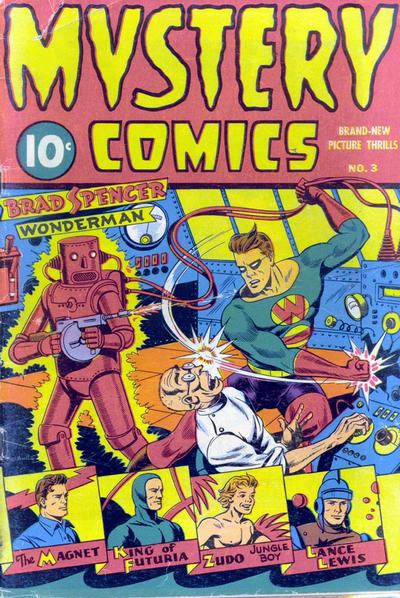
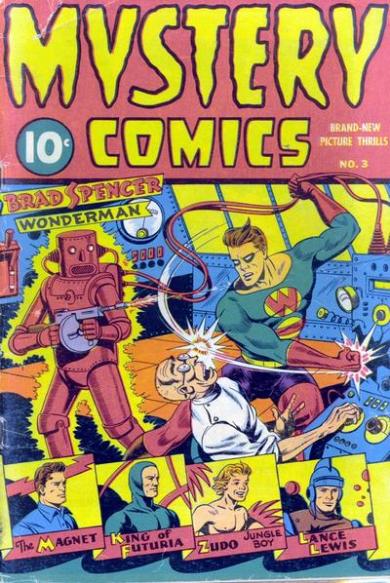
Another obscured issue and then we see Mystery Comics #3, published in 1944 (no month indicated). This great Schomburg cover features Wonder Man battling a mad scientist who’s built a human-sized pink robot who fires a Thompson sub-machine gun and glows, perhaps indicating that he’s radioactive or ultra-electrical or something. Covers sold the comics and what kid could resist a cover like that?!?!?!? This comic gets another facing at the bottom of the rack.
Image

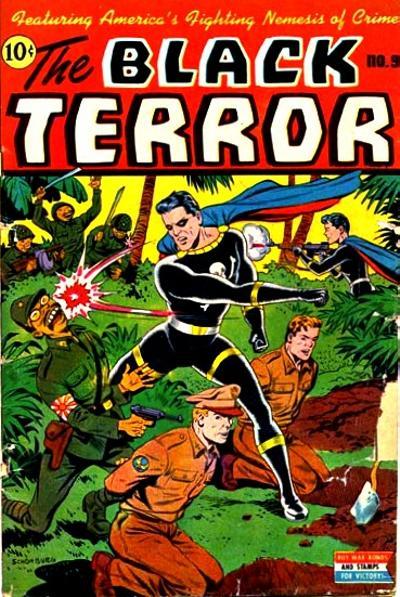
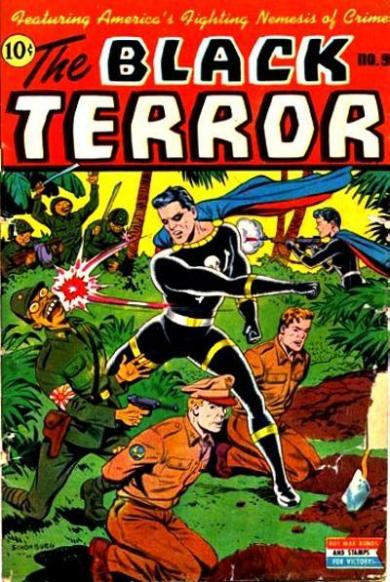
Below this comic on the rack is another issue of Black Terror; this one is #9, from February of 1945. These war-time comics had covers that can make us cringe today; the enemy folks in this Pacific-theater-of-war cover are absurdly rendered to convey their evil qualities, and young Tim doesn’t hesitate to mow them down with another Thompson sub-machine gun, perhaps borrowed from the pink robot in the previous comic. Those Tommy-guns were all over comic book covers in those days.
Image

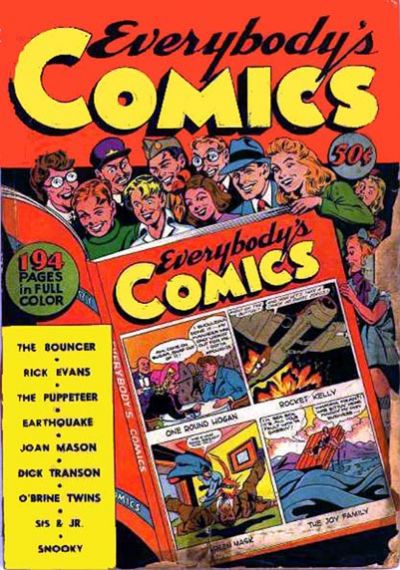
Our last issue is a whopper; the 194-page Everybody’s Comics from 1944. This giant-sized offering was published by Fox Comics, perhaps the sleaziest of all comic-book publishers (and that’s saying a great deal). What publisher Victor Fox would do was take the comic books returned by news dealers as unsold, bundle three or four random issues together and slap a new cover over whatever the contents were. There are examples of numbered issues of these giant comics that have totally different interiors; it was all very slapdash and shoddy.

Image

That’s all for this entry. As I mentioned in the previous entry, there are no DC Comics (or Dells, or Timelys, or MLJ/Archies) on this rack, which leads me to suspect there were other comic-book racks at this store not shown in the photo.

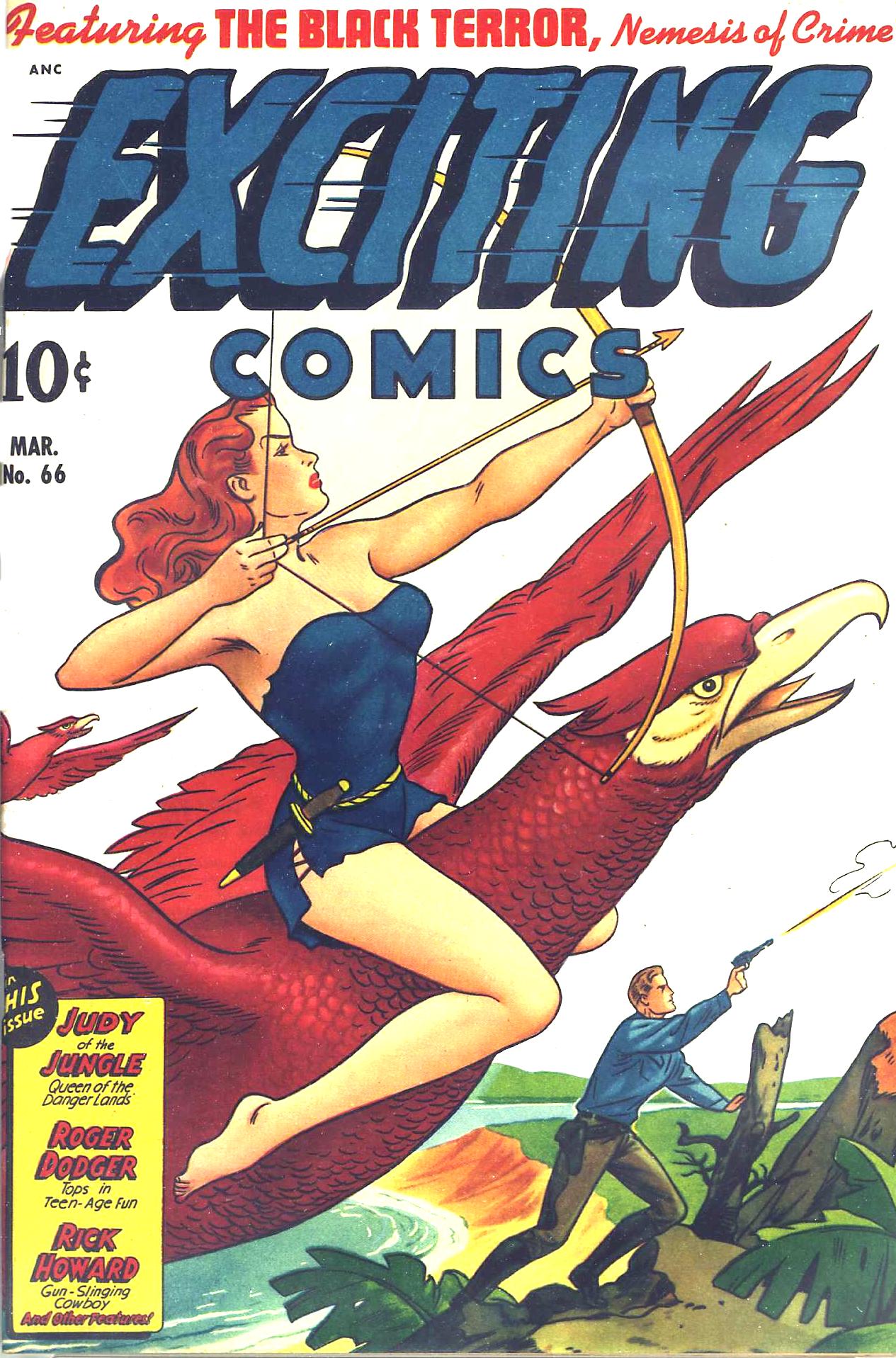
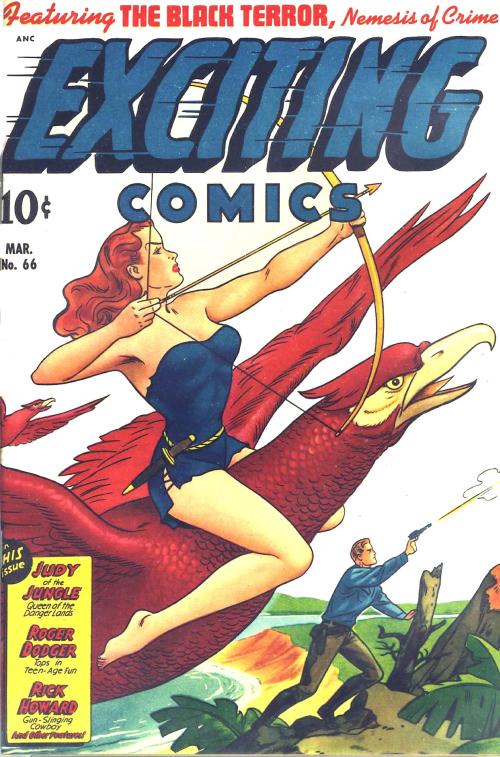
UPDATE:  I can’t resist showing you one of Alex Schomburg’s airbrush-style covers; this one is from Exciting Comics #66. Much different than the ornately detailed covers he did using his pen-and-ink style, wouldn’t you say?
Exciting_066_JVJ.cbz - Page 1

DC Comics History: Get This Book!

2 Comments

Image

A precursor of The Office’s Jim Halpert looks at comics on sale. Oddly enough, not one DC comic on this rack. Based on the cover of Don Winslow of the Navy #26 and Red Band Comics #4 or 5 (both used the same art!), this was taken in March of 1945.

As a kid, I would read any comic book I could get my hands on, but my favorites were DC Comics. The writing, characters and production values were, to me, the best of anything out there. I liked other brands, like Harvey, Archies and Dell, but DC was tops.

Marvel Comics, at that time, was not making superhero comics; their offerings were mainly books about monsters or takeoffs on comics produced by other companies. If Harvey Comics put out Casper, the Friendly Ghost, Marvel would put out Homer, the Happy Ghost, and Charlton Comics, the bottom of the barrel in production values, put out Timmy, the Timid Ghost. One day, I’ll do a blog entry on the laughable print quality of Charlton Comics; they were usually printed so far out of register that they looked like the old red-blue 3-D comics.

So it was mainly DC for me!

My primary fascination was the drawing, but I was also intrigued by the production aspects of the things:

• How did they get from typewriter and pencil to the finished book?
• How did they print the 64 colors used?

• How come some comics used line screens for colors and some used dot screens?

• How did they get the logos and such so perfect on each issue?

• Who owned the company (DC at that time was called National Periodical Publications, Inc)?

• How did all the drugstores and newsstands get these books on the racks every other Tuesday morning?

• How much did the ads in the books cost and did they bring in dimes from the readers?

• How many copies of each comic did they print?

• How come some comics were monthlies and some were bi-monthlies?

• Why was the cost a dime?

What kind of company makes comic books?!?!??

Image

When I was a kid, drugs stores were the best place to buy comics, as they seemed to carry all the issues published. Based on the cover of Action Comics #243 in this photo, it was taken in May of 1958. Yes; I am a geek! Had this photo been taken in Pascagoula, Mississippi, that could have been me in the pale jacket reading Strange Tales #65.

That was the stuff I wondered about.

I needed the following book: 75 Years Of DC Comics: The Art Of Modern Mythmaking, written by Paul Levitz, former president and publisher of DC Comics.

Image

Nice touch: The title lettering mimics the lettering used on DC’s Action and Adventure comic book titles.

720 pages in a large, 15-1/2″ x 11-1/2″ format, weighing in at about 15 pounds, this is a stunner of a book. Absolutely engrossing, written in an amusing yet authoritative style, it’s simply the best history of comic books out there, and I’ve read ’em all. It’s expensive at over $150, but if that’s what it costs, so be it. It’s well worth more than that.

The book, heavily illustrated with comic covers and interior pages as you might expect, is augmented by rare photos of DC folks, from founders Malcolm Wheeler-Nicholson, Harry Donenfeld and Jack Liebowitz to production folks like Sol Harrison, Jack Adler, and, of course, many of the art and writing talents from DC’s history. Associated media, like cartoons, TV shows and films are well covered, too.

For me, whose interest in primarily in the marketing and print-production aspects of the comic books, a fascinating discovery was the cover/sales chart sheets kept by Irwin Donenfeld, Irwin was the son of DC co-founder Harry Donenfeld, and was co-owner, editorial director and vice-president of DC from about 1948 to 1968. These hand-drawn charts showed the covers of each DC comic by month, with notations of the size of the print run and percentage of copies sold written under each cover.

Image

Notice the Batman logo change on this series of covers from the mid-1960s; one of Irwin Donenfeld’s sales charts.

Brilliant.

75 Years of DC Comics: Buy it, borrow it or check it out from a library; it is an amazing piece of work! You will learn something new on every page and the visual appeal is breathtaking. Here’s the Barnes & Noble info:

http://www.barnesandnoble.com/listing/2684868360209?r=1&cm_mmca2=pla&cm_mmc=GooglePLA-_-Book_45Up-_-Q000000633-_-2684868360209

Older Entries Newer Entries