Home

Leo the Hedgehog

3 Comments

The ancient Greek poet Archilochus wrote that “The fox knows many things, but the hedgehog knows one big thing.”

I’ve spent the last few months learning everything I could about Leo Fender, creator of Fender Musical Instruments, and I’ve come to the conclusion that, like the hedgehog, Leo had one guiding principle; his was: Make simple products for the working musician which can be quickly repaired.

Leo-Fender

Leo Fender tinkering. Photo by Jon Sievert.

Mr. Fender never bothered with a “mission statement,” which many firms try to have. Mission statements require precision of thought and clarity of vision, which is uncommon, so most mission statements confuse by including too much. Clarity requires exclusion.

How did Leo Fender develop his vision? Because he got his start as a radio repairman. Folks came to his little shop in Fullerton, California, every day with a broken thing and they needed it fixed in hours, not days, because they made their living with it. And Mr. Fender became known as someone who could fix things quickly. As he was fixing amps and PAs made by others, he noticed what was wrong with the designs of the products.

He got into making guitars– lap steels at first– so he could sell his amps. He decided guitars were too complicated and decided to simplify their construction to what was absolutely essential and could be quickly replaced without special skills or tools.

Guitars of that time– we’re talking late 1940s here– were not always made by painstaking individual craftsmen, but they did take skill and time to make. If something went out of whack, as always happens even to the best guitars, it took a lot of skill and time to correct.

Leo’s guitars were a military-grade assembly of easily replaceable components. Other guitar makers scoffed at his “canoe paddle” solid-body instruments, but they didn’t laugh for long. And the amps Leo made, from tried-and-true circuits using the best hardware he could find– war surplus was cheap and plentiful after WWII– were solid, dependable and sounded great. No one laughed at those; they were too busy trying unsuccessfully to copy them. Without Leo’s vision, other guitar and amp makers most often tripped over their own feet. It might look like a Fender product but it didn’t play or sound like one.

As long as Leo ran his company, his vision, like gravity, was always in effect. Leo wasn’t a socializer and he was thrifty to a fault. He was happiest tinkering with new ways to simplify and improve things and he’d only pal around with those who produced something with their hands.

Leo didn’t design his products for rock and roll, because that wasn’t being played in the clubs and honky-tonks of his day. He and his assistants would take their prototype guitars and amps to local clubs where country guitarists worked, and have them try them on stage. Leo listened to the comments and criticisms he got from these working musicians and incorporated their feedback into the next prototype.

When kids who grew up hearing country, gospel, blues, folk, rhythm and blues and other music got the early Fender products in their hands, it sparked a revolution in music. The hedgehog Leo, who never played guitar, wore hearing aids and hadn’t planned to help create rock and roll, was astonished. Happily astonished. And so were we.

In this photo from 1950, Leo Fender is on the right. The player holding the Fender Broadcaster guitar is Dub Williams and the fellow behind him is singer/songwriter/bandleader Eddie Miller; together they wrote the classic “Release Me.” The woman hasn’t been identified.

Fender After Leo:

Leo sold Fender Musical Instruments to CBS, the TV folks, for a staggering amount of money in January of 1965, because he thought he was dying. He wasn’t, and CBS, full of foxes and savvy operators, ran Fender into the ground. Even teens like me realized the CBS-made Fender guitars and amps were less than what they had been, and a market grew for “pre-CBS” Fender products.

Some brilliant Japanese craftsmen made a huge impact in the mid-1970s building guitars like Leo made them. They’d buy old Leo-made Fenders, blueprint them down to the tiniest detail, and replicate them precisely. I own one of their Stratocasters (a Tokai copy of the 1958 Strat Buddy Holly played), and I took it apart and put it back together until I “got it,” and then built my own version of a early-1950s “Leo” Telecaster. It’s my favorite guitar. It’s like a tank that sings.

In 1985, CBS realized it couldn’t complete with the Japanese guitars or the early Fenders, threw in the towel and sold the company at a loss to some guitar guys, who took Fender back to its roots.

Leo, when his non-compete with CBS ran out in 1975, founded Music Man and later G&L Musical Instruments. Both companies made guitars and amps that Leo thought were improvements to his earlier designs. Both companies, like the back-to-Leo Fender, are going strong today.

Leo died in 1991. G&L has kept his unpretentious office/lab exactly as it was the last day he worked, a couple of days before he died. His coffee cup (a white styrofoam cup with “Leo” written on it with a Sharpie marker) is still on his work bench.

Leo-Fender-Lab_bench-1A

Leo’s office as he left it. Photo by John Connell.

Leo the hedgehog changed the world and did it his way.
Tom Edison’s Wild Ride

Leave a comment

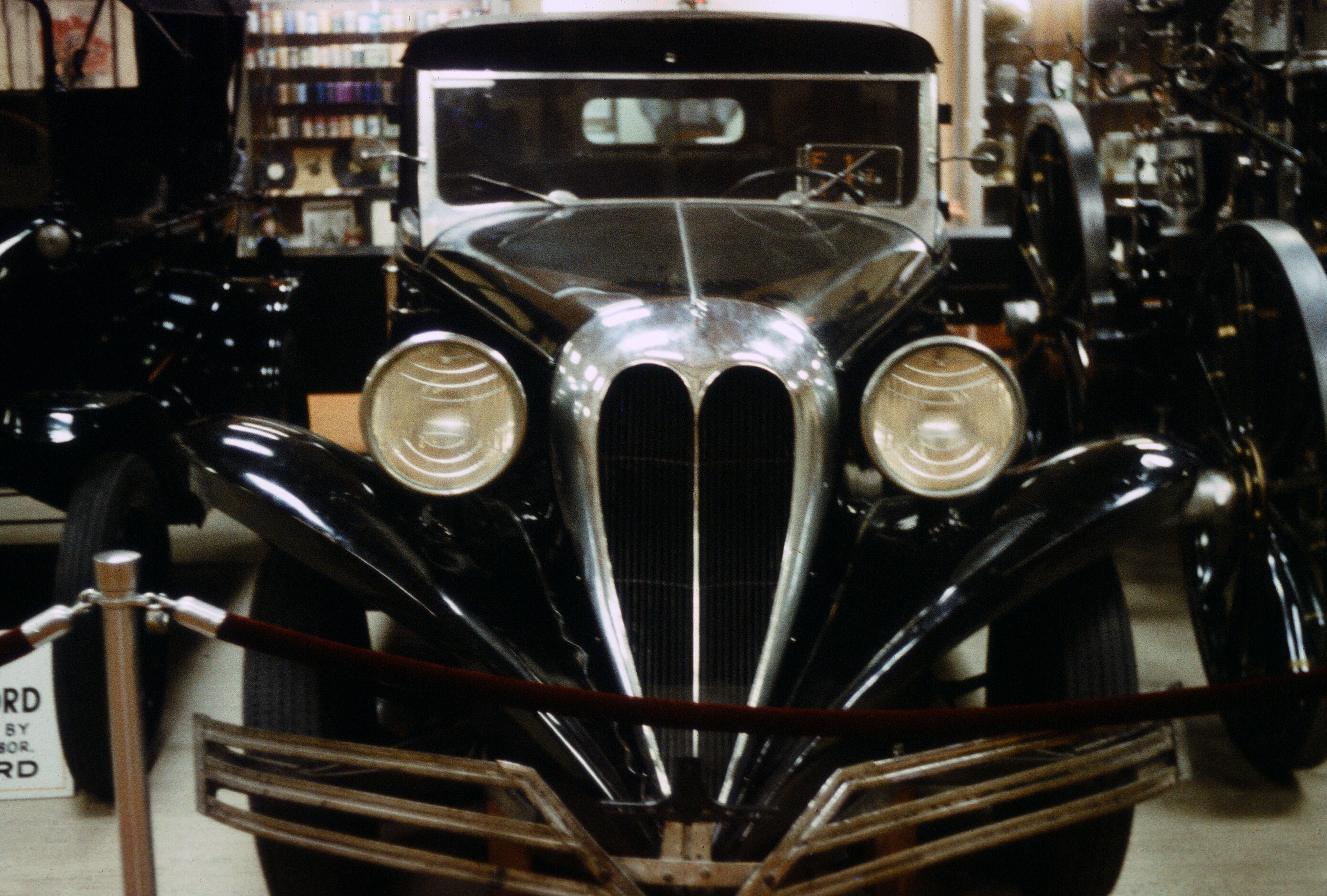
Sure, Edison is the light bulb and phonograph guy, but he also evidently appreciated nice cars. He used to go camping with Henry Ford and Harvey Firestone, after all, and they’d sometimes let President Warren Harding come along.

Shown here is a photo I took in 1973 of a car at Edison’s Fort Myers, Florida, home and lab. It’s a 1930s Brewster-bodied Ford Town Car. I just love the sweeping lines of that radiator shell. If I remember correctly, Edison’s son, Charles, later drove this car when he was governor of New Jersey and Secretary of the Navy. There were several of Edison’s cars there, including electric ones he had developed, but this one was my favorite.

One thing that struck me when I visited this wonderful site is that several light bulbs that Edison built by hand have been burning there continuously since about 1910 or so. Granted, they are big, low-wattage bulbs but a light bulb that can burn for over 100 years is an amazing thing to see. Also, his first phonograph is there. Since Edison was stone deaf, he had to bite the wooden case of the thing to see if his invention worked or not. You can see his teethmarks in the woodwork.

Café Du Monde, 1965

Leave a comment

We continue our review of old color photos with one of the New Orleans of 1965.

When I was a kid we lived in Louisiana for a few years, and going to the Café Du Monde at the Farmer’s Market in New Orleans was always a big treat. The puffy and powdered beignets with the strong coffee in teeny cups was something I looked forward to. The location, then as now, was by the levee and the old Jax Beer factory.

In this photo are my mom, me with the glasses and my younger brother, Jeff. The nifty beige car behind my mom is a 1961 Plymouth Savoy.

All Hung Up!

Leave a comment

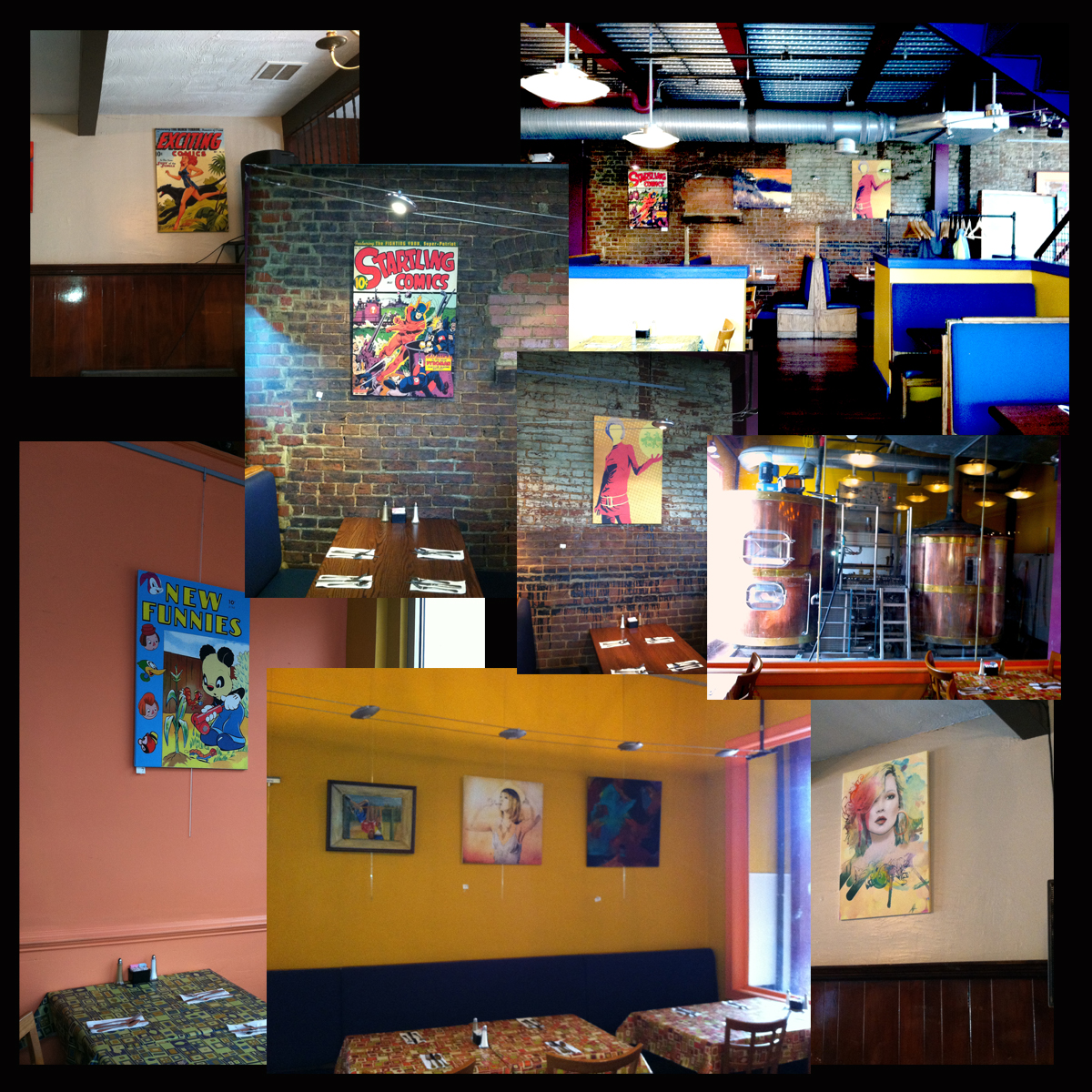
My son, Aaron, and I are both members of the Hyattsville Community Arts Alliance, and are proud to announce that six of our works are now on display (and sale!) at local restaurants; four at Franklin’s and two at the Calvert House.

Aaron does his digital paintings from scratch on the PC and I recreate and revise ancient comic book covers on the Mac. These images are then printed on canvas and placed on wooden stretchers by my daughter, Colleen.

So it’s a family project and we are having a lot of fun doing it!

The giant copper vats shown in the photo collage are where they brew their own beers and ales at Franklin’s. If you remember the actress Karen Allen from Raiders of the Lost Ark, she’s sometimes seen at the Calvert House, which has been her favorite restaurant from childhood.

The company I started with my brother, Jeff, is called Page Bros Prints and you can see our website at www.PageBrosPrints.com. We have some historic prints for sale at the Surratt House Museum in Clinton, Maryland. That was where John Wilkes Booth stopped for some previously stashed stuff after he shot Abraham Lincoln.

The Man, The Legend: Jerry White!

Leave a comment

Here’s a studio portrait I did a few years ago of my great friend, Jerry White. As the photo tries to convey, a classy guy and a great guitar player. Jerry’s enthusiasm and helpful spirit are second to none.

Jer and I shared a lot of laughs!!! We need to get together, Jer!

It Floats!

Leave a comment

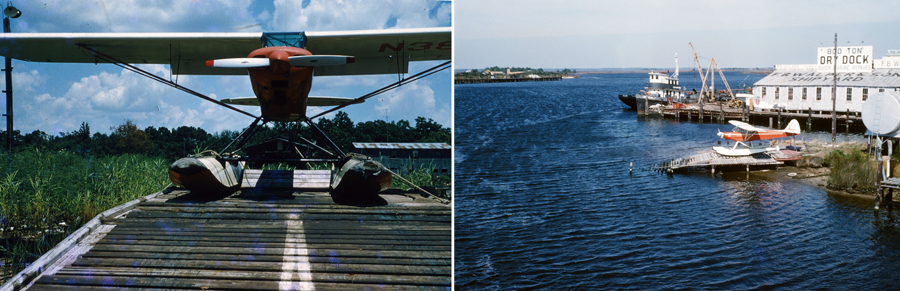
My dad was a nut about airplanes like I am about guitars.

In 1958, we were living in Pascagoula, Mississippi, and Dad bought a brand-new Piper Super-Cub, had it fitted with pontoons at the Piper factory, and then had a ramp built on the Pascagoula River complete with a gas pump and turntable platform above the ramp so the plane could be easily swung around. I can’t imagine what that whole setup cost or why he felt the need to do it.

You Can Go Home Again, Thanks To Google Maps . . .

Leave a comment

Google Street Views is so cool! Thanks to it, I was able to find the house we lived in over 50 years ago, as seen in these two photos.

The photo on the left is from 1961, with my first-grade brother Jeff in the foreground. On the right is the Google street view, present day. The three-car garage has been modified to what looks like living space, but otherwise it looks much the same.

Leaving The Station With A Lunchbag In My Hand . . .

2 Comments

For the train buffs out there, here’s a photo from 1961 showing our cub-scout pack bravely going off to camp.

Behind me (I’m the kid being scolded by his mom) is the Kansas City Southern’s “Southern Belle” passenger train, which provided service between New Orleans and Kansas City, and the Pullman car shown is the “Siloam Springs” double-bedroom sleeper.

My mom was the most nervous den mother the Scouts ever had! I’ll never forget her trying to teach our pack how to make a Play-Doh Thanksgiving scene. She finally wigged out when it came time to teach us how to make a covered bridge out of toothpicks.

My little friends and I were shocked when she grabbed the toothpicks and paste and threw them into the trash, saying “To Hell with it!” while lighting a cigarette. Those were the days!

Bye-Bye Beach House!

Leave a comment

In this photo taken Saturday, September 12, 1964, my mom and I check out our destroyed duplex beach house in Fernandina (Amelia Island, Florida) after Hurricane Dora.

When Patty and I visited the scene a few years ago, we were able to find part of a concrete block from the house.

Unfortunately, flood/storm insurance was not available on ocean-front property in those days, and my dad even had to pay $600 to have the rubble bulldozed away. Of course, that house was WAY too close to the water!

The Beatles played the Gator Bowl in Jacksonville the next evening, having flown to Key West to avoid the storm. My Uncle Johnny’s girlfriend was ill, and he offered me the ticket he had purchased for her. I was bummed and decided to stay at the family farm on the mainland and play Scrabble with my cousins. BAD DECISION!!!

What’s That Smell?

15 Comments

I’m going to recycle some recent Facebook entries of mine to kick off this blog. It’s the eco-friendly thing to do!

If anyone wants to know what the weirdest, most pungent smell in the world is, my vote goes for a menhaden fish-processing plant, more commonly called a “pogie plant.” This one was on Highway 87 between Port Arthur and Sabine Pass, Texas, and owned by a friend of my dad’s, John Quinn.

My dad was fascinated by menhaden fish; he’d spot huge schools of them in the Gulf of Mexico from his plane, radio the fishing boats as to the location, and they’d pay him a percentage of the catch’s proceeds. That was called “fish spotting” and some pilots made a lot of money doing that!

A Texas marine biologist’s report from 1960 that I found on the web claimed that this plant, and one other in Texas, processed 60 MILLION pounds of menhaden in 1959. Holy mackerel, that’s a lot of fish!!!

The lettering on the front of the building cracks me up!

Photo from 1958 (I think!).

Here’s another photo of this plant. Aren’t the old vehicles fun to see? My dad’s car is the 1952 DeSoto Custom Club coupé which looks black in this photo, but was actually a very dark green. He loved that car and so did I. I’m guessing that bright-red object is either a gas pump or– and this is entirely possible– Dr Who is visiting Sabine Pass, Texas, for some reason.

Older Entries Newer Entries