Home

It’s Just The Best Spaghetti In The Whole World; That’s All

1 Comment

One place our family went to a lot when I was a kid was Madame Turci’s Italian Restaurant in New Orleans. The man and woman who ran the place were famed opera singers in Italy in the 1920s. I understand that the restaurant closed down in the early 1970s. Too bad; it was super!

A friend from the Shorpy.com nation (Hi, Colleen!!!) found for me a recipe for the spaghetti sauce they served at Turci’s; she found it here:

http://www.nomenu.com

The site has, among other interesting info about New Orleans food and restaurants, over 600 recipes you can try!

Here’s the Turci’s spaghetti recipe from that wonderful site. My daughter is reluctant to cook with chicken innards, but I’m encouraging her to try cooking it anyway. It’s a two-day process.

Spaghetti Ala Turci

  • Stock:
  • 1 small whole chicken (gizzards, liver and heart reserved)
  • 1 bay leaf
  • 1/2 onion, cut into chunks
  • Leafy tops from 1 bunch celery
  • Stems from 1 bunch parsley
  • Sauce:
  • 1 pound ground veal
  • 1 pound ground pork
  • Gizzards and heart from the chicken above, chopped
  • 1/3 cup olive oil
  • 1/2 cup chopped onion
  • 1/2 cup chopped celery
  • 2 cloves garlic, chopped
  • 1 lb. ham steak with fat, finely diced
  • 1 8-oz. can tomato paste
  • 1 28-oz. can whole Italian tomatoes, pureed
  • 1 quart chicken stock
  • 1/4 tsp. thyme
  • 1/2 tsp. basil
  • 1 tsp. oregano
  • Meatballs:
  • 1/2 tsp. salt
  • 1/4 tsp. pepper
  • 1/2 cup freshly-grated bread crumbs
  • 1/4 cup finely grated parmesan cheese
  • 1 tsp. Italian seasoning
  • 12 sprigs fresh parsley, leaves only, chopped
  • 2 eggs, beaten into a froth
  • 8 oz. white mushrooms, sliced
  • 2 lbs. spaghetti

1. Put all the stock ingredients into a saucepan with 1/2 gallon of water. Bring to a light boil, then lower to a simmer. Simmer for 90 minutes, uncovered. Strain the stock and set aside. Put the chicken into a food storage bag and into the refrigerator.

2. Heat a tablespoon of olive oil in a heavy, large skillet over medium-high heat. Remove a fistful each of the ground veal and ground pork (put the rest into the refrigerator). Add the meats to the skillet, along with the chicken gizzards and heart. Let the meat brown well, then break it up with a kitchen fork. Remove from the pan with a slotted spoon and set aside.

3. In a large saucepan or dutch oven over medium heat, heat the remaining olive oil until it shimmers. Add the onions, celery, and garlic until they get soft.

4. Raise the heat to medium-high. Add the tomato paste and the pureed tomatoes. Cook for about ten minutes, stirring constantly, until it gets thick and noticeably darker in color.

5. Add the chopped ham and the browned veal and pork. Continue to cook and stir for another three minutes.

6. Add 5 cups of of the chicken broth, and the thyme, basil, and oregano. Bring to a boil then lower to a simmer. Cover the pot and let it simmer for for two hours. Stir the pot, scraping the bottom well every twenty minutes or so.

7. After two hours, turn off the heat and let the pot cool for a half-hour. Spoon the contents into a large bowl or food storage container. Put it into the refrigerator overnight to let the flavors come together.

8. The next day–about two hours before you’re ready to serve–put the sauce back onto the stove on low heat. If it seems too thick after it warms up, stir in add a little more chicken stock.

9. Pull about two cups of chicken meat–a blend of white and dark–from the chicken you used to make the stock. Slice it if necessary into pieces the size of the tip of your little finger.

10. Make the meatballs next. Combine the salt, pepper, bread crumbs, parmesan cheese, Italian seasoning and parsley with a fork. Wet your hands with cold water, and combine the remaining ground pork and veal with sprinklings of the bread crumb mixture and the beaten eggs. Handle all of this as gently as possible, rolling the meatballs into rough spheres about an inch and a half in diameter. Cracks should show around the outside. Gentle!

11. Heat 2 Tbs. of olive oil in a skillet until it shimmers. Drop a few of the meatballs in. Every few seconds, roll them around (gently!) until they’re browned all over (not cooked all the way through). Remove and drain. Keep going until all the meatballs are cooked.

12. Add the meatballs and the chicken to the sauce. Simmer for an hour, stirring only very lightly (to avoid breaking the meatballs). Add the mushrooms, and salt and pepper to taste. Cook another fifteen minutes.

13. Cook the spaghetti until still firm (six minutes or so). Drain and put it into a big bowl. Ladle about two cups of the liquid part of the sauce over the spaghetti and toss to coat. Serve in big bowls with the remaining sauce on top.

Serves eight to twelve.

The Peppers Were Hung By The Window With Care . . .

Leave a comment

My pepper saga continues as I look for ways to use up these darned things. Today’s experiment takes the form of me threading some peppers on thin cotton twine and hanging them above the kitchen window.

Will they dry nicely and become a tasty addition to my food over the coming months? What do I look like to you; the Answer Man? I have no idea. Patty will probably fling the entire string into the trash as soon as she gets home, but for now they look attractive and even festive. I sense some resentment on their part, but peppers are known for their cranky temperament and I refuse to let their attitudes get to me.

For those who haven’t been paying attention, my crop is composed of ampuis, cowhorn, cherry, and Anaheim peppers; they aren’t hot peppers but spicy.

Stay tuned!

Oh, Duncan, You Crazy Nut!

Leave a comment

I am usually happy to ignore those teaser news thingies that float above my mailbox on AOL, but today one led me to look into the history of Duncan Hines; the man, not the cake mix.

Hines was a printing salesman who had eaten in nearly every state in the Union, and in 1935 he and his wife wrote the first popular guide to restaurants in America, Adventures in Good Eating, which is still in print. He later sold his name and the rights to his book to a flour company, and their baking goods are what most folks think of when they hear his name.

I found a great blog that covers his restaurant reviews in detail and visits the places still existing that he reviewed: http://www.adventuresingoodeating.org/

He favorably reviewed Colonel Harland Sanders’ place in Corbin, Kentucky in 1939 and that led to the Kentucky Fried Chicken empire. Not all of his reviews were kind; here’s one from the above-mentioned blog that’s snarky in a charming way:

If the soup was as warm as the wine, if the wine was as old as the turkey, if the turkey had breasts like the maid, it would have been a fine dinner.”

The Office May End, But Scanton Lives!

1 Comment

Just heard from my son-in-law, Greg, that next season (season nine) will be the last for The Office. Too bad, but it had a long run and was always entertaining.

Greg and I visited Scranton, Pennsylvania, home to the fictional show, a couple of times and took the Office Tours of some of the locations where the show either filmed or mentioned frequently. The other Office fans on the tours were always a great bunch and we had a lot of laughs with them.

Scranton lays claim to being the Electric City and the electricity there was certainly splendid.

Poor Richard’s Pub, often mentioned on the show, is actually in a bowling alley across the parking lot from Alfredo’s Pizza Café, where I had what may well be the best pizzas of my life.

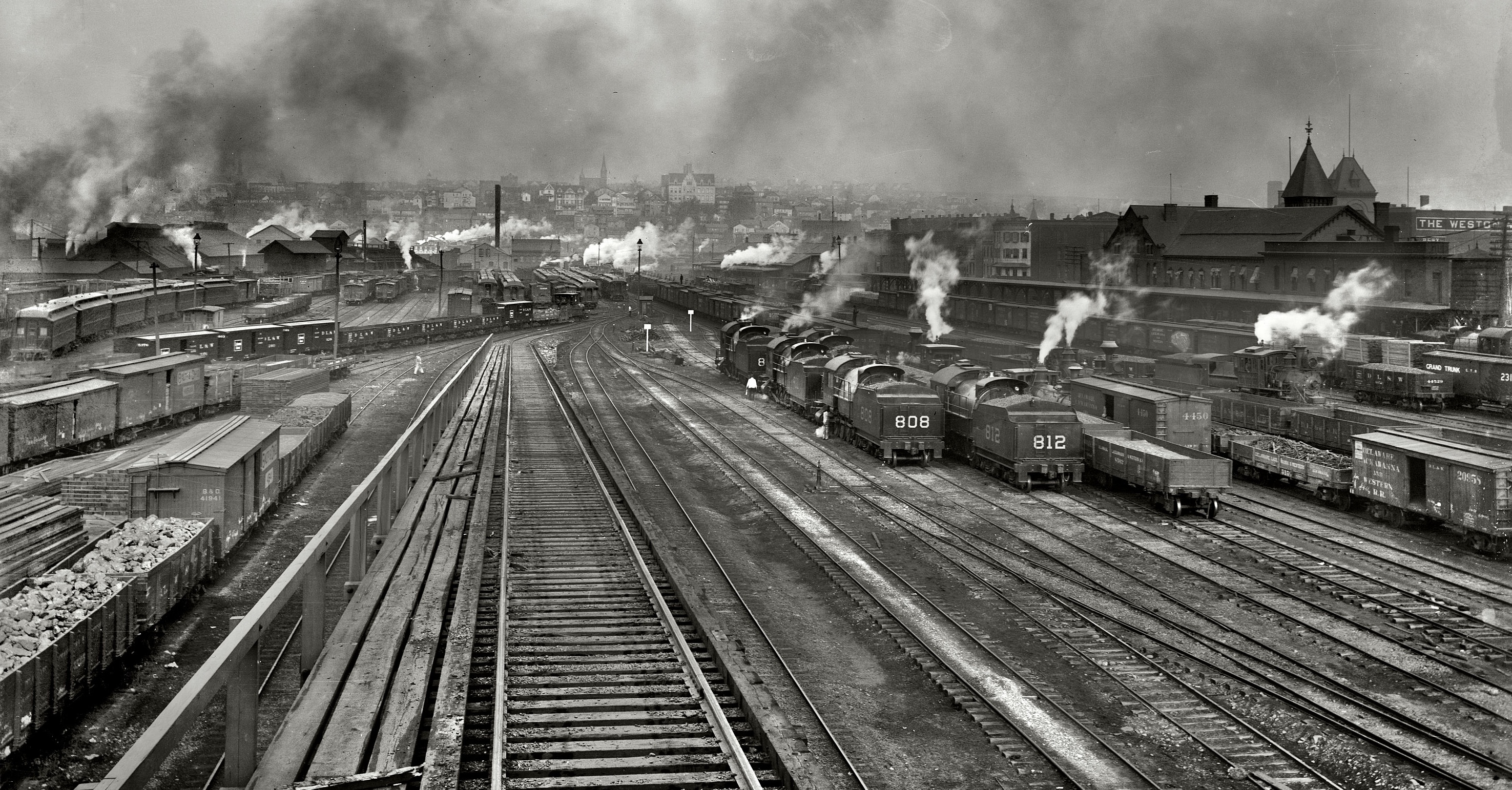
Scranton is an interesting city even without the Office connection. It has lots of trains; the Steamtown Mall downtown is adjacent to the old Delaware, Lackawanna and Western Railroad yard that goes back many decades and still has steam locomotives moving about. It smells very odd; coal fumes, I guess.

Thanks to the good folks at http://www.Shorpy.com, we can see a view from just about the same position taken in 1900. Doesn’t look all that different, does it? That long, sloping walkway is still in place, leading now to a railroad museum, I believe:


Scranton is also in coal-mining country, though I’m a little too claustrophobic to want to tour a coal mine.

Poor Richard’s is more my style:

There’s a street-corner sign claiming to be the site of the birth of doo-wop but I didn’t have time to explore the site or the claim. The town’s newspaper building has great old-fashioned elevators and there’s a 1930’s-era radio broadcast studio there that’s most interesting.

Greg and I had lunch both visits at Cooper’s Seafood House as part of the tours. That’s one of the tour buses in the photo below. Cooper’s as seen on the show is a Hollywood recreation, but they did a good job of it; it’s a fun and funky place and the food is excellent. You may not think a beet salad would be something special, but at Cooper’s it was. The bathrooms are even themed: Elvis for the ladies and The Beatles for the gents. Click on my photo below to enlarge it and you’ll see the pirate above the entrance and the octopus on the deck above that! Wonderful place and very near where Joe Biden and Hillary Clinton’s dad were born.

If you plan to visit Scranton, the Radisson Lackawanna Station Hotel, as the name implies, is the old train station repurposed and a very pleasant place to stay.

I didn’t take the two hotel photos; they’re from the hotel’s website, and the old black-and-white railyard photo is from the Shorpy.com collection of glass-plate and other historic imagery. All the other photos were taken with my trusty iPhone.

I hope to visit Scranton again. There’s a lot to see and do.

Jimmy Can Cook!

Leave a comment

Actually, I can’t cook worth a hoot, but I was able to concoct something that is attractive and darned tasty and have decided to brag about it.

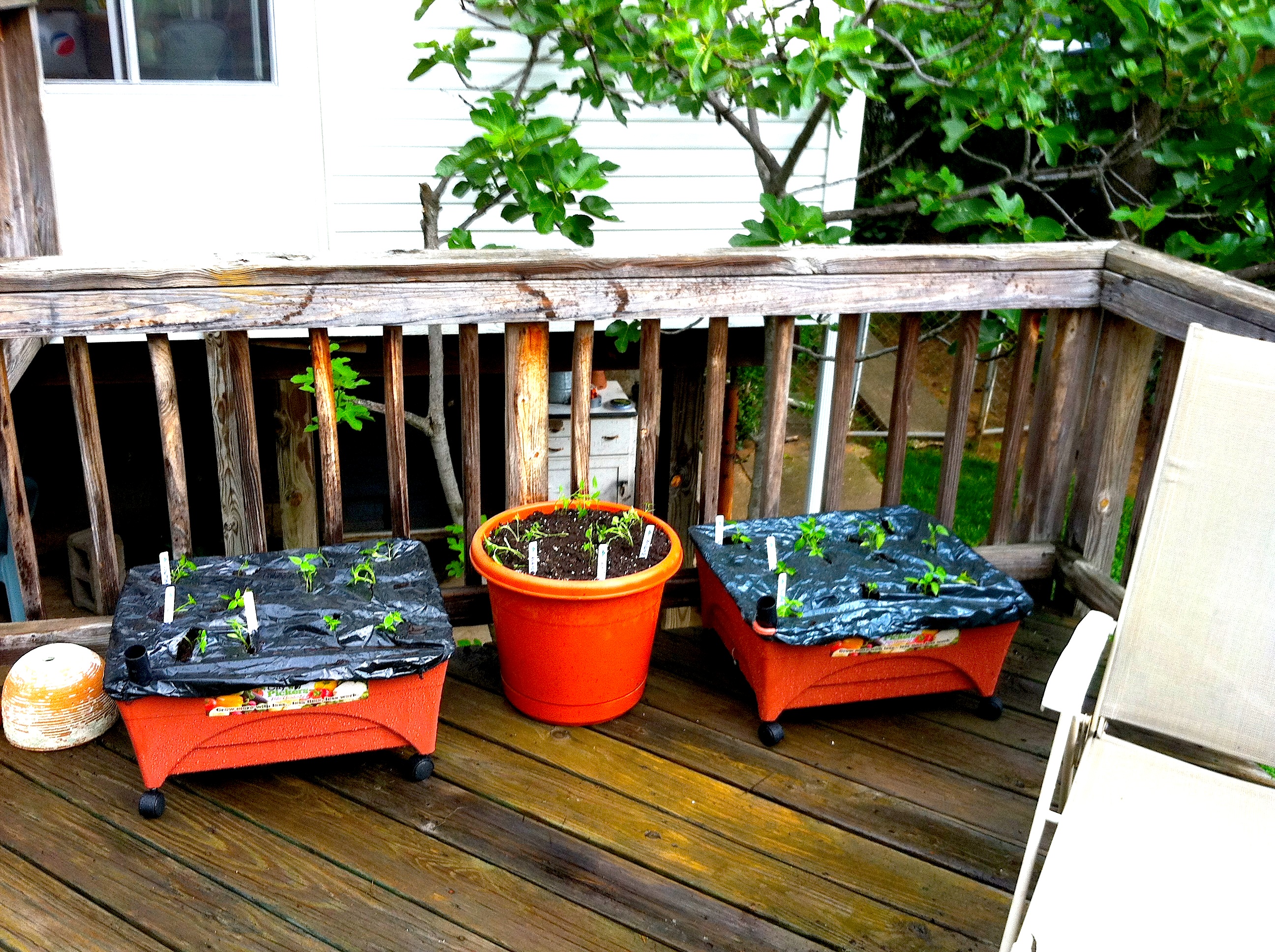
This year, I grew, from seeds, four varieties of peppers: ampuis, Anaheim, cherry and cowhorn. These, according to the website I ordered the seeds from, are spicy but not hot peppers. So it seems. Here they are in their little starter pods:

And then as seedlings on our back deck a month and a half later:

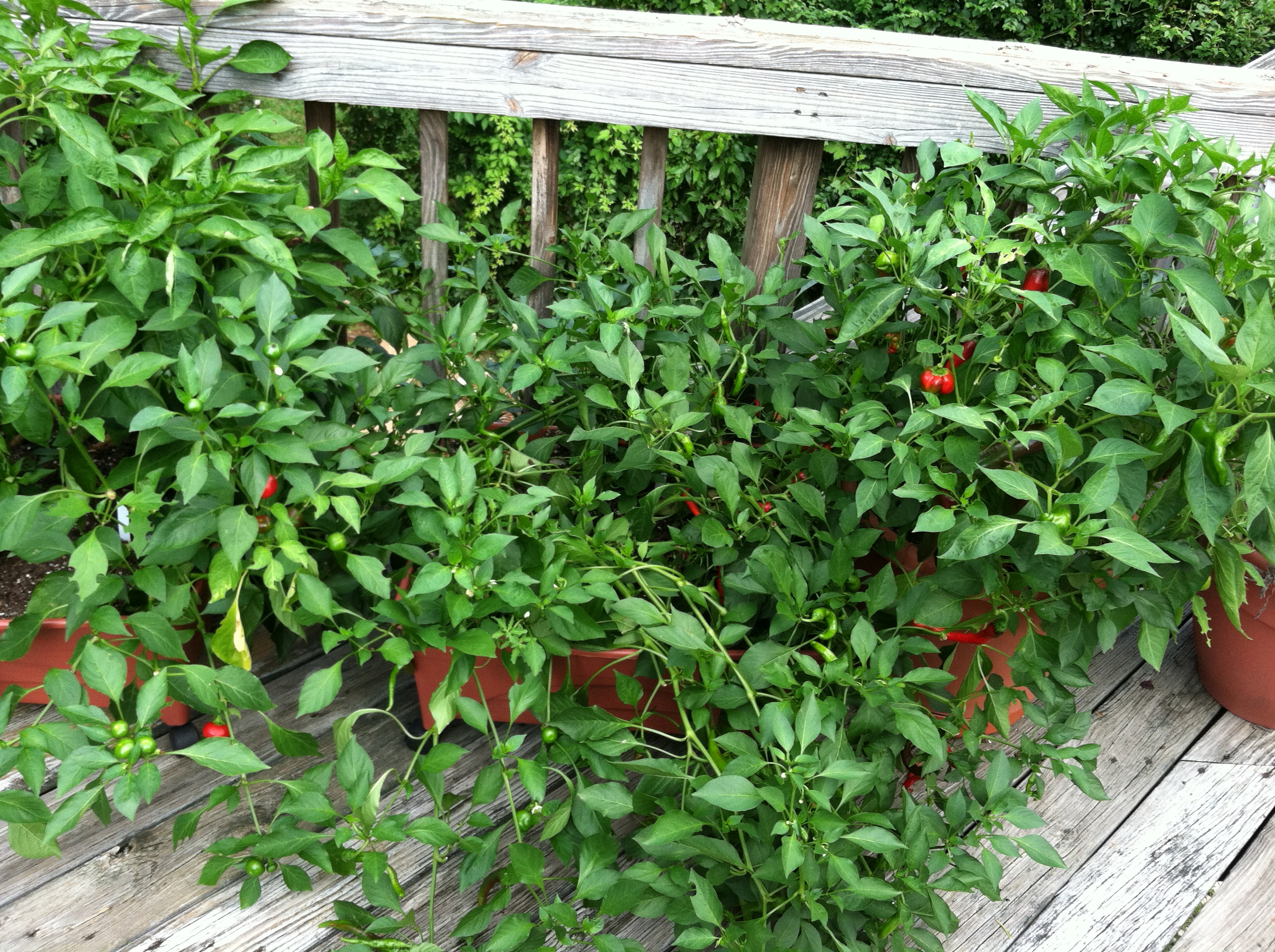
And as they are today:

Of course, I now have an abundance of peppers on my hands and am compelled to do something with them. Thus my little cooking experiment.

Background: My wife, Patty, is a phenom at cooking among other things and I am not. I sustained myself through college, in that pre-microwave age, by toasting bread and dumping whatever Boil-In-Bag item I had in the freezer on top of it. If I was feeling ambitious, I’d throw a slice of American cheese on top. Vegetables? Canned corn, pork-and-beans or spinach would be about as far as I would attempt.

But this year, faced with a bumper crop of peppers, I knew I had to come up with something to do with them. Patty flatly refused to cook with them, as she doesn’t like hot or spicy foods. So . . .

First I made some pepper vinegar with my cowhorn peppers, laced with some red-pepper flakes and a couple of other peppers from my crop. Worked great, but only used up a small number of peppers.

Then, crazed with that success, I created this concoction of provolone cheese, sliced peppers, mozzarella cheese and anchovies. Isn’t it great looking?

Tastes great, especially when placed on top of Triscuit crackers.

Recipe: A layer of provolone slices in a Pyrex dish (put down some Pam spray first), add the sliced peppers, then a layer of shredded mozzarella topped with a can’s worth of flat anchovies. Bake for 25 minutes at 350° and then hit with the broiler for a couple of minutes.

Try it and thank me later!

Didn’t See THESE In Hanover . . .

Leave a comment

Before we leave the subject of potato chips, here’s a product that was years ahead of its time: Sealtest’s Chipnics Homogenized Potato Chips:

Years later, when Pringles came out with basically the same product, the potato growers had the government prevent them from being called “potato chips;” they could only be called “potato crisps.”

Here’s an ad for the ill-fated Chipnics starring comedian Marty Ingels:

I bet if they’d used Alvin the Chipmunk to sell those things they’d still be around today. And the odd layout for the ad text makes me think those lines should rhyme.

Is It Uhtz or Ootz?

4 Comments

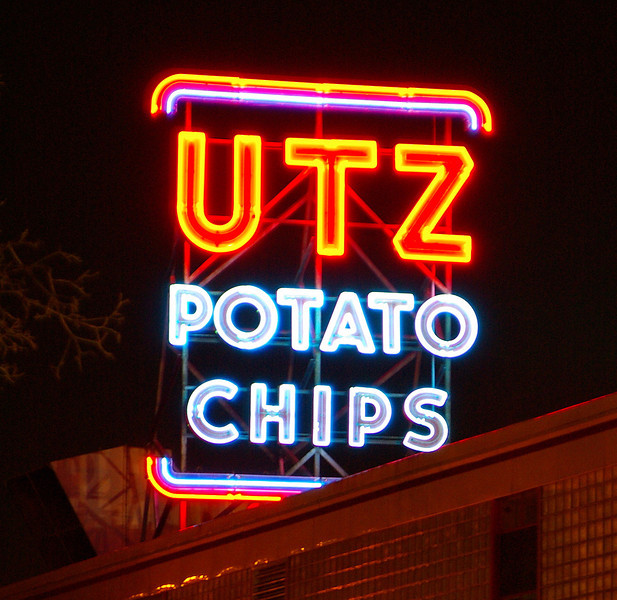
The movie at the beginning of the tour pronounced it Uhtz, so I suppose that’s the official way to say it! As long as you don’t say Frito-Lay or Planter’s, the folks at Utz are probably happy.

My daughter and grand-daughters and I visited the main Utz factory on High Street, in Hanover, Pennsylvania, today. It was impressive, though the term “tour” implies that you are guided through a facility by a person. Not so. The folks at Utz barely have one toe in the water when it comes to promoting their history and manufacturing technique. Seems odd.

They don’t allow photography inside the plant unless someone in authority has okayed it first and I couldn’t find anyone to ask. So I can’t show you the manufacturing there; you’ll have to imagine what it looks like.

If I were Utz, I’d be fine with folks taking photos of their chip-making process. It was modern, efficient and ultra-clean. The sight of all those raw potatoes whizzing through chutes and conveyers and turning into mounds of tasty chips seems worthy of a picture or two, wouldn’t you think?

Before the tour, which is self-guided, one walks up a flight of stairs into what looks like a medium-sized company’s break room. There is a small theater running an endless-loop 15-minute film, which I didn’t watch once they said the word “Utz.” As I mentioned earlier, I wanted the official pronunciation.

Here’s the Utz Mission Statement at the foot of the stairs. Since I hadn’t gone up the stairs yet, I hope this photo isn’t in violation of the Utz no-photo policy. This is a typical over-thought mission statement, which I guarantee you won’t finish reading and that no employee there can recite. A mission statement shouldn’t be over twelve words. So something like “Making the World Happier With the Best Snacks We Can Make” would probably be better and about 60 words shorter:

Also below the stairs is a display showing some old machinery:

Hey; it’s an iPhone photo! Be nice!!!

A few displays inside the break-room show the early history of Utz and gave my daughter and me a clue as to where the firm started in Hanover. More on that in a minute.

The main portion of the “tour” is a walk down a long corridor where the various stations in the chip-making process can be viewed through large windows. You can press a button and a recording explains what’s going on at each point.

This reminded me of the corridor in a brushless car wash.

The Utz staff as seen through the glass windows was friendly; some waved at my grand-daughter and she was delighted. Also, they have cute little wooden stiles where kids can climb up and see through the glass. My older grand-daughter thought they were the best part of the tour.

The pototoes are turned into a variety of chips and packaged before your eyes. Too bad I can’t show you any photos, as it really was impressive. It is a huge operation.

My thoughts drifted back, as I looked at this lackluster effort at a factory tour, to the Tampa Busch Gardens tour setup back in the early 1970s. It was much the same as the Utz tour is now, except they had people walking you through the place and there were gardens and exotic birds outside the facility. Now there are rides, shows, music and other entertainment and the whole place generates revenue.

After the tour, my daughter and I decided to try to find out where Utz started. We knew it was a house on McAlister Street in Hanover. We also knew that, as the company grew, William and Salie Utz, who started in 1921 by selling chips cooked in their kitchen, enlarged their home. After a few years of growth, they built a small factory behind the house.

The house isn’t marked, but Neenie found it by spotting the factory (now closed) in the alley behind the house. Notice the additions on the back of the residence:

Here’s the front of the original Utz factory, which reminds me somehow of the Alamo:

Quite a history and quite an impressive operation. I hope the firm someday decides to showcase it properly!

No Frogs Were Harmed In The Making Of This Stew

Leave a comment

As many of you know from experience, Patty is a talented and skilled cook. Tonight she’s made something called Frogmore Stew.

She’s made it several times before, but this is the first time that she explained to me what it was. So I pass this on to you! Yes, you sure get what you pay for when you visit THIS blog!

Patty said this is also called Low Country Boil. Her version, as you can see, uses baby Yukon Gold potatoes.

I looked it up on the Net and this delicious dish was developed by a fellow in Beaufort, South Carolina in the 1960s. He was using up leftovers when cooking for his fellow guardsmen, and then brought the recipe home with him to the seafood market he ran in the town of Frogmore, on St. Helena Island.

Here’s a recipe from the What’s Cooking America website, which also has the history I just provided, but Patty has her own way of making Frogmore Stew. I love it!

Frogmore Stew

Yields: 8 servings

Prep time: 10 min

Cook time: 15 min

Ingredients:
1 1/2 gallons water

Juice of one (1) lemon

Salt to taste 
3 tablespoons

Old Bay Seasoning

2 pounds sausage (kielbasa, etc.), cut into 1/2-inch slices

10 to 12 ears of corn on the cob, broken into 3-inch pieces

4 pounds uncooked shrimp in shell

Preparation:
In a large stock pot over medium-high heat, add the water, lemon, salt, and Old Bay Seasoning; bring to a boil.

Add sausage and gently boil, uncovered, five minutes. Add corn and cook and continue cooking an additional five minutes (begin timing immediately, don’t wait until water is boiling).

Add shrimp and cook and additional three minutes longer. Remove from heat, drain immediately, and serve.”

The Pleasure Was All Mine

3 Comments

When I was in high school, I was recruited from a two-week stint at Winn Dixie to Publix Supermarkets (Where Shopping is a Pleasure!) by Bob DeVille, who managed the Naples store and was one of the smartest men I’ve ever known. He came to our house and told my mom and dad I would be better off working for him. I ended up spending 14 years at Publix, though I often got frustrated and quit. Mr. DeVille would wait a month or so and then call me up to see if I’d calmed down and was ready to return. I usually did.

I got into the produce department because I had read that an agricultural job could keep you from being drafted and sent to Viet Nam. After I while, I was transferred to Tampa and eventually I got my own produce department in a tiny art-deco Publix on Nebraska Avenue. I loved that store and the staff and customers. Patty and I were just married, and I was happy to have a job during a tough recession.

I’d work hard to make creative displays, using hand-lettered signs and the contrasts in colors and shapes of the produce to create excitement and interest. Fresh produce wasn’t a big deal at that time, and most of the unusual stuff I tried to sell didn’t. I’d have recipe cards and samples available but folks didn’t want to know what a Kiwi fruit was or to give a carambola a try. I was lucky to sell half a case of romaine to every twenty cases of iceburg lettuce.

Working in a supermarket was a great way to learn what ads worked and what ads didn’t; what displays moved merchandise and what displays didn’t, and I was lucky enough to work for a store manager who let me try anything that I dreamed up. I’d draw little graphs of where people stopped in my little department, what they put in their shopping cart and what they didn’t.

On the side, I’d do freelance writing, photography and graphics, and when I made more money one year doing that than I did at Publix, I left for good. But I learned a lot and met Patty there, and consider myself most lucky for the experience.

Café Du Monde, 1965

Leave a comment

We continue our review of old color photos with one of the New Orleans of 1965.

When I was a kid we lived in Louisiana for a few years, and going to the Café Du Monde at the Farmer’s Market in New Orleans was always a big treat. The puffy and powdered beignets with the strong coffee in teeny cups was something I looked forward to. The location, then as now, was by the levee and the old Jax Beer factory.

In this photo are my mom, me with the glasses and my younger brother, Jeff. The nifty beige car behind my mom is a 1961 Plymouth Savoy.

Newer Entries